
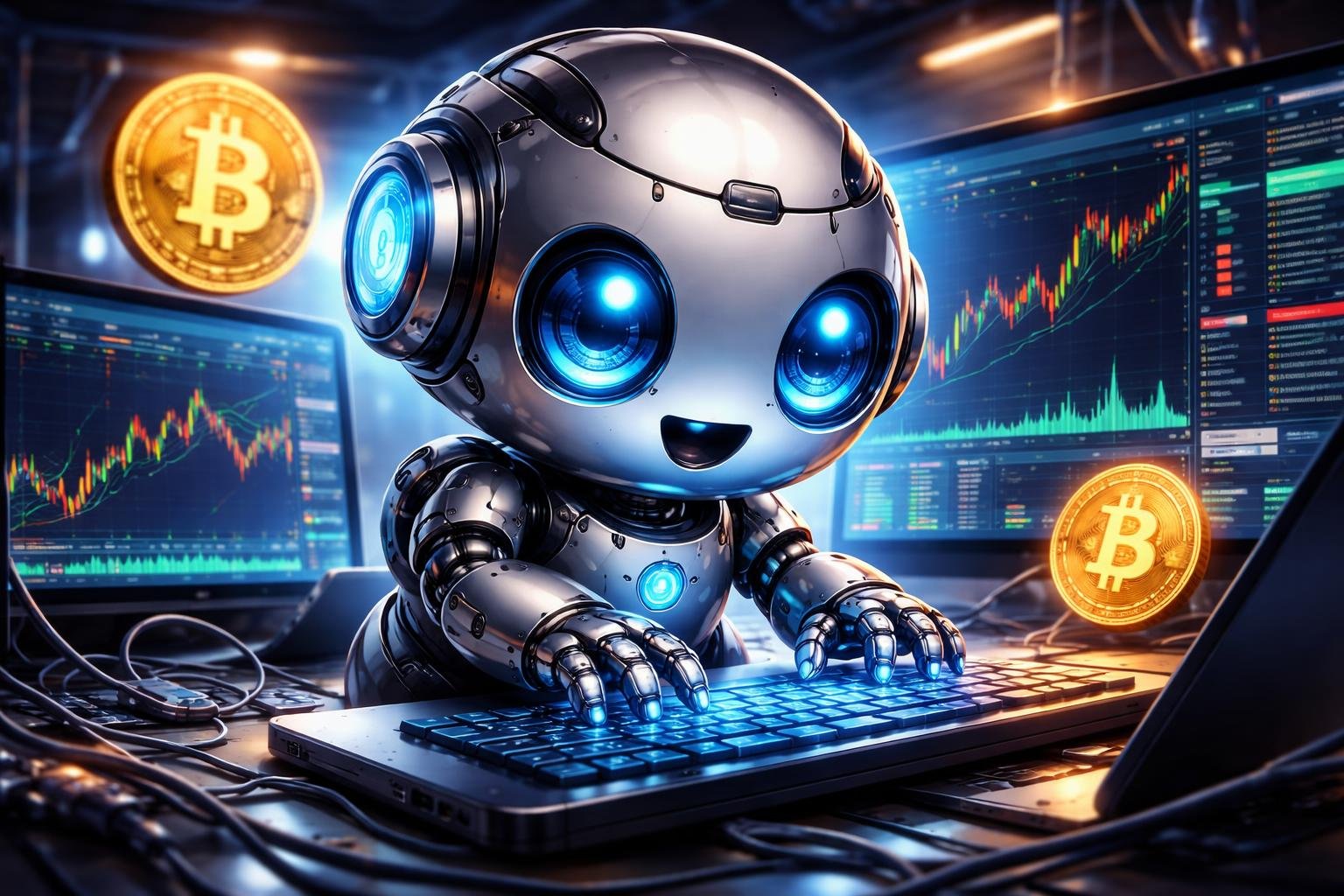
The debate between algorithmic trading and manual execution has intensified as artificial intelligence becomes increasingly sophisticated. While seasoned traders take pride in their market intuition and years of experience, the cold statistics tell a sobering story: 90% of retail traders fail to generate consistent profits. This raises a provocative question that’s reshaping the investment landscape—can AI trading bots like BluStar actually outperform human decision-making?
The answer isn’t as simple as declaring one approach superior to the other. However, examining the fundamental differences between human psychology and algorithmic precision reveals why automated systems are gaining ground. For investors wondering “is BluStar AI good” enough to replace their manual trading efforts, understanding these distinctions is essential.
The Human Trading Problem: Why 90% Fail
Before evaluating whether BluStar is good at solving trading challenges, we must understand why human traders struggle so dramatically. The 90% failure rate isn’t due to lack of intelligence or access to information—it stems from psychological and practical limitations inherent to human nature.
Emotional Decision-Making: Research indicates that 70% of retail traders lose money specifically due to emotionally-driven decisions. Fear and greed—the twin demons of trading—cause predictable patterns of self-sabotage. Traders hold losing positions too long hoping for recovery (fear of admitting mistakes), cut winning trades too early (fear of giving back gains), and chase momentum after moves have already occurred (greed and FOMO).
A trader might develop a solid strategy during calm analysis, but when real money is at risk and markets move violently, emotional responses override logical planning. The amygdala hijacks the prefrontal cortex, and disciplined execution evaporates.
Physical and Mental Limitations: Human traders face unavoidable constraints. Markets operate 24 hours across global time zones, but humans require sleep. Even the most dedicated trader monitoring charts 8-12 hours daily will miss the majority of trading opportunities. Fatigue degrades decision quality, and the stress of constant vigilance impacts both trading performance and quality of life.
A retail trader in New York monitoring forex markets misses Asian session opportunities. A crypto trader sleeping through the night cannot react to sudden Bitcoin moves. These gaps represent lost opportunities and unmanaged risk.
Information Processing Speed: Human brains cannot process and analyze the volume of data required for optimal trading decisions. A trader might monitor 5-10 indicators across multiple timeframes for a handful of assets. Meanwhile, meaningful market information flows from hundreds of sources simultaneously—price action, volume, correlations, news events, social sentiment, and more.
Even if a human could theoretically process all this information, they couldn’t execute fast enough. By the time a manual trader identifies a setup, places an order, and confirms execution, the optimal entry price has already moved.
Consistency Issues: Human performance varies dramatically based on countless factors—sleep quality, stress levels, personal problems, physical health, and even blood sugar levels affect trading decisions. A strategy that a trader executes perfectly on Monday might be implemented completely differently on Friday after a stressful week.
The AI Advantage: How BluStar Eliminates Human Weaknesses
Algorithmic trading systems like BluStar AI address these human limitations through fundamental architectural differences. Understanding these advantages helps answer whether BluStar is good enough to replace manual approaches.
Complete Emotional Neutrality: BluStar’s bots execute trades based purely on statistical probability and mathematical models. A winning trade doesn’t trigger overconfidence. A losing trade doesn’t cause fear or revenge trading. The algorithm applies its strategy with identical precision on the first trade and the thousandth trade.
This emotional neutrality proves especially valuable during market volatility. When human traders panic during crashes or become euphoric during rallies, AI systems maintain consistent strategy execution. The 81-85% win rates reported across BluStar’s three bots reflect this disciplined consistency.
24/7/365 Operation: BluStar’s Blu-BTC bot executes 30-50 trades daily in cryptocurrency markets that never close. The Blu-EUR forex bot captures opportunities across Asian, European, and American trading sessions without requiring sleep. The Blu-GOLD bot monitors gold markets during the critical London session with perfect attention.
This continuous operation doesn’t just increase opportunity capture—it provides comprehensive risk management. If market conditions turn adverse at 3 AM, BluStar’s 0.1-second risk management system activates stop-loss protection automatically. A sleeping human trader faces uncontrolled losses.
Superhuman Processing Capacity: BluStar processes millions of data points per second, analyzing patterns across multiple timeframes, assets, and market conditions simultaneously. The platform’s supervised machine learning algorithms identify complex relationships that would be invisible to human observation.
For example, the Blu-GOLD bot exploits “statistically significant relationships present in the London trading session”—subtle correlations between gold movements and other market factors that emerge from analyzing years of tick-by-tick data. No human trader could manually identify these relationships, let alone execute them with millisecond precision.
Perfect Consistency: BluStar executes its strategies identically every single time. The same market setup triggers the same response whether it’s the first day of operation or three years later. Position sizing follows exact mathematical formulas. Stop-losses activate at predetermined levels without hesitation. Take-profit targets are hit without premature exits.
This mechanical consistency eliminates the performance variability that plagues human traders. The average 84% win rate across BluStar’s bots reflects thousands of trades executed with perfect adherence to strategy parameters.
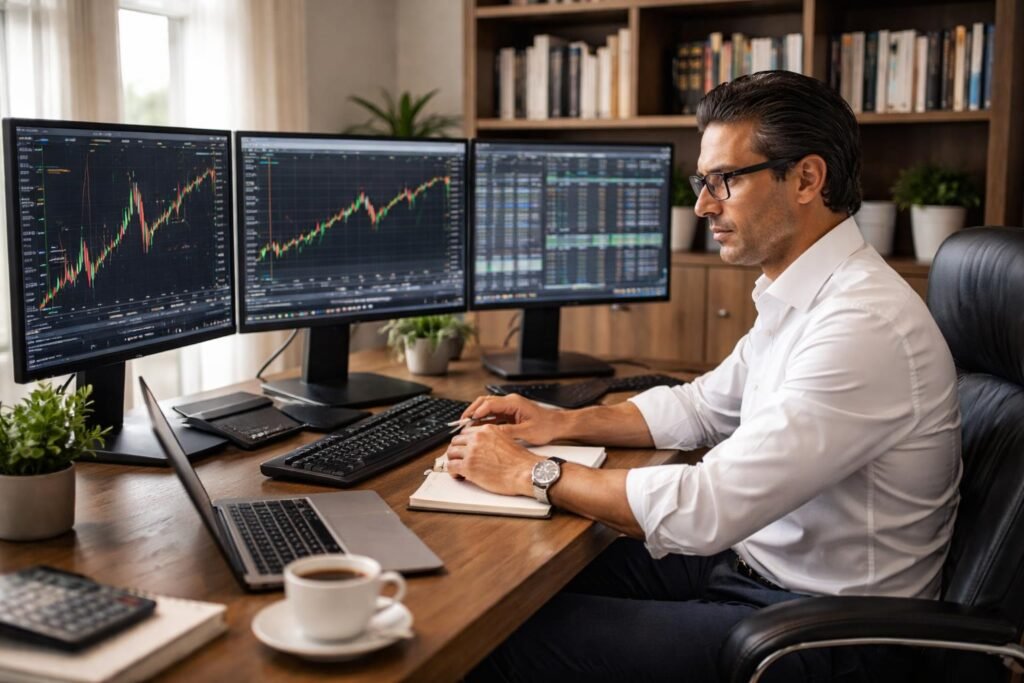
Where Humans Still Hold Advantages
An honest evaluation of whether BluStar AI is good must acknowledge areas where human judgment retains value. AI trading bots, despite their strengths, have specific limitations.
Unprecedented Events: Algorithms train on historical data and identify patterns from past market behavior. When genuinely unprecedented events occur—like the 2020 COVID pandemic market crash or unexpected geopolitical crises—AI systems may encounter conditions outside their training data. Experienced human traders can apply judgment and adapt strategies to novel situations.
However, it’s worth noting that most human traders also perform poorly during unprecedented events, often making emotionally-driven mistakes under stress that algorithms avoid.
Fundamental Analysis: BluStar focuses on technical analysis and price pattern recognition. Human traders can incorporate qualitative fundamental analysis—understanding business models, evaluating management quality, analyzing competitive positioning, and assessing macroeconomic trends. This contextual understanding can inform longer-term position sizing and asset selection decisions.
That said, most retail traders lack the expertise for sophisticated fundamental analysis, and short-term trading (BluStar’s focus) relies more heavily on technical factors than fundamental analysis anyway.
Strategic Adaptation: Experienced traders can recognize when market regimes change and modify strategies accordingly. If a previously effective approach stops working, humans can pause, analyze why, and adjust. Algorithmic systems continue executing their programmed strategies until developers modify the code.
BluStar partially addresses this through its specialized bot approach—using different bots for different market conditions rather than one universal strategy. The ensemble methods combining multiple strategies also provide some adaptation capability.
The Hybrid Approach: Strategic Oversight with Automated Execution
The most sophisticated answer to “is BluStar good enough to replace manual trading” might be: it depends on what “replace” means. Rather than viewing AI and human involvement as mutually exclusive, many successful traders adopt a hybrid approach that leverages the strengths of both.
In this model, human traders provide strategic oversight—deciding which BluStar bots to deploy, how much capital to allocate to each, when to activate or pause systems based on broader market assessment, and how to integrate algorithmic trading within a complete investment portfolio. The AI handles tactical execution—identifying setups, entering positions, managing risk, and closing trades with precision and consistency.
This division of labor plays to respective strengths. Humans provide judgment, contextual awareness, and strategic direction. AI provides tireless execution, emotional discipline, and superhuman processing speed.
For the average retail trader who currently attempts fully manual trading, BluStar’s automated approach represents a massive upgrade even without perfect human oversight. The 90% failure rate among manual traders suggests that for most people, delegating execution to algorithms produces better outcomes than attempting to do everything manually.
The Practical Reality: Most Traders Should Use AI
After examining the evidence objectively, is BluStar AI good enough to replace manual trading for most retail investors? The answer is yes, with appropriate caveats.
The fundamental challenge facing retail traders isn’t that they lack potential—it’s that manual trading demands a combination of skills, discipline, time availability, and psychological fortitude that very few people possess. The 90% failure rate reflects this reality. Even traders with sound strategies often fail at consistent execution due to human psychological and practical limitations.
BluStar’s specialized bots—reporting 81-85% win rates and 4-12% monthly returns—dramatically outperform the typical retail trader’s results. More importantly, they do so while requiring minimal time investment and eliminating the emotional stress that makes manual trading psychologically taxing.
Is BluStar good for experienced, consistently profitable manual traders who’ve overcome psychological barriers and developed robust strategies? Perhaps not—they’ve already solved the problems that algorithms address. But this describes less than 10% of retail traders.
For the vast majority—those in the 90% who struggle with consistency, emotion management, time constraints, and execution discipline—AI trading bots like BluStar represent not just an alternative to manual trading, but a genuinely superior approach. The question isn’t whether algorithms can match human traders on average; the data clearly shows they substantially exceed average human performance.
The real question is whether individual traders can honestly assess which group they belong to. Those rare individuals with proven, consistent manual trading success might reasonably continue their approach. Everyone else should seriously consider whether BluStar’s automated systems might produce better outcomes than their current manual efforts.
The future of retail trading isn’t about humans versus machines—it’s about humans smart enough to let machines handle what machines do best.
DISCLAIMER: This article is for informational purposes only and does not constitute financial or investment advice. Trading involves substantial risk of loss. Past performance does not guarantee future results. Performance claims mentioned have not been independently verified. Conduct your own research and consult a licensed financial advisor before making investment decisions. Never invest money you cannot afford to lose. The author disclaims liability for any losses resulting from information in this article.